Recently, the team of Professor Song Chuankui at the laboratory published online in Science Advances a research paper entitled “Squalene acts as feedback signaling molecule in facilitating bidirectional communication between tea plants”. The study revealed for the first time the molecular mechanism by which tea plants achieve a “two-way dialogue” by releasing a substance called squalene and “huddle together for warmth” through the squalene–sterol signal–CsCBF5 pathway. This research breaks through the traditional understanding of one-way warning between plants, reveals that plants can achieve population-level coordinated stress tolerance through chemical signals, and opens a new avenue for stress-resistance breeding in tea plants. It is worth mentioning that this paper is the first Science Advances paper published in the global field of tea science.
Tea plant is an important global leaf-type economic crop, and low temperature is one of the main environmental stresses limiting its growth and geographical distribution. Low temperature induces tea plants to release specific volatiles (VOCs), and particular VOCs can be recognized by surrounding plants as chemical signals to initiate cold-tolerance responses, but whether the signal receiver gives a feedback response has always been a mystery. To this end, the team designed a volatile-mediated bidirectional communication experiment and found that when normal tea plants (receivers) were present around cold-stressed tea plants (donors), the cold tolerance of the donors was significantly improved (Figure 1), confirming the existence of a “huddling for warmth” phenomenon in tea plants. On this basis, the team proposed a bold conjecture: receiver plants do not passively accept signals; similar to human language communication, there is also a “two-way dialogue” between plants.
To search for the feedback signal in plant communication, the team analysed the metabolites of neighbouring receiver tea plants after low-temperature communication and found that receiver plants respond by releasing squalene. Then, through exogenous squalene treatment combined with silencing of the squalene synthase gene (SQS), they verified that squalene can significantly improve the cold tolerance of the initial signal donor tea plants. To further clarify the mechanism of action, the team used transcriptomics and targeted metabolic analysis and confirmed that squalene released by receiver tea plants can be absorbed by donor tea plants, promote the accumulation of brassinosteroid (BR), and enhance the cold tolerance of donor tea plants by activating the CsCBF5 cold-response pathway.
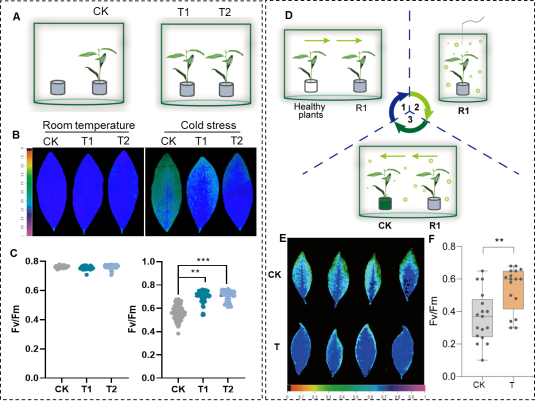
Figure 1. Design of the bidirectional communication experiment and detection of cold tolerance
To further clarify the molecular mechanism by which the feedback signal squalene regulates cold tolerance in tea plants, the team used yeast one-hybrid, EMSA and dual-luciferase experiments to confirm that the BR signalling pathway transcription factor CsBES1 directly binds the CsCBF5 promoter and activates its expression. In addition, by inhibiting BR synthesis and silencing CsCBF5, they verified the necessity of the “CsBES1–CsCBF5” pathway in squalene-mediated cold tolerance in tea plants (Figure 2). Unlike the traditional ICE–CBF1 pathway, this mechanism relies on targeted regulation of CsCBF5 by the BR signalling core transcription factor CsBES1 (Figure 2).
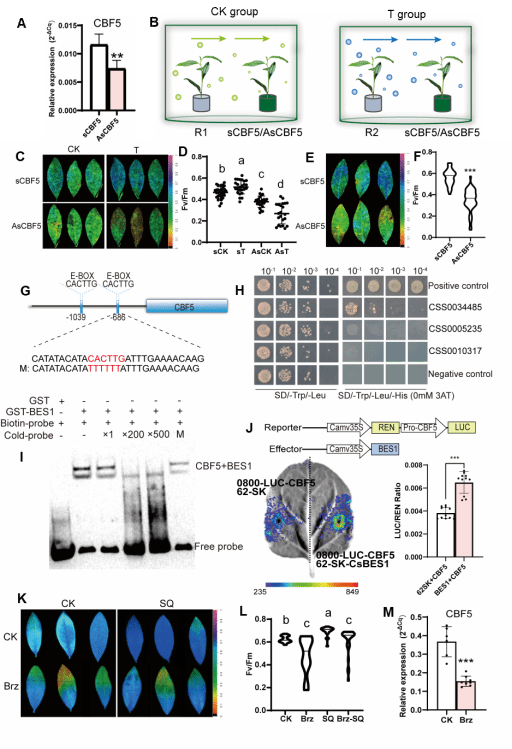
Figure 2. Squalene improves tea plant cold tolerance through the BES1–CsCBF5 pathway
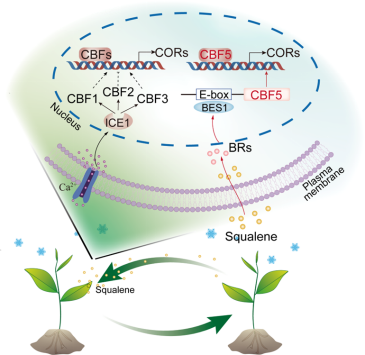
Figure 3. Model of the feedback signal squalene improving the cold tolerance of the initial signal donor tea seedlings
In summary, after receiving the signal, receiver tea plants not only initiate their own cold-tolerance mechanisms, but also enhance the cold tolerance of donor tea plants through feedback release of squalene, achieving “huddling together to get through the cold winter”. This study not only breaks through the traditional understanding of one-way warning between plants, but also provides a new research paradigm for intelligent responses in plant populations.
Professor Song Chuankui of the National Key Laboratory of Tea Plant Germplasm Innovation and Resource Utilization, Anhui Agricultural University, is the corresponding author of this paper, and postdoctoral fellow Jin Jieyang is the first author. Professor Wilfried Schwab of the Technical University of Munich, Germany, Associate Professor Jing Tingting and Associate Professor Wang Qiang participated in the study. The project was supported by the National Key R&D Program and the National Natural Science Foundation of China. In addition, the study received technical support in BR measurement from Researcher Chu Jinfang and Dr. Yan Jijun of the Institute of Genetics and Developmental Biology, Chinese Academy of Sciences, and the National Plant Gene Research Centre (Beijing). (Figures / text / Jin Jieyang; editor / Guan Zhenyu; pre-review / Song Chuankui; review / Zheng Xuelin)


 LATEST
RESEARCH
LATEST
RESEARCH