Recently, the team of Professor Wei Chaoling at the National Key Laboratory of Tea Plant Germplasm Innovation and Resource Utilization, Anhui Agricultural University, published online in Plant Physiology a research paper entitled “CsNAC2 and CsMYB306 orchestrate a jasmonate signaling cascade contributing to tea plant resistance to Ectropis obliqua”. The study revealed that cis-3-hexenyl acetate (3-HAC), a herbivore-induced plant volatile (HIPV), can be absorbed by tea plants as an exogenous signalling molecule and up-regulate CsLOX2 expression through the transcription factors CsNAC2/CsMYB306, thereby activating the jasmonate signalling pathway and enhancing tea plant resistance to Ectropis obliqua. This finding further expands the understanding of how HIPVs enhance plant defence against pests and provides a new theoretical basis for developing green pest control technologies in tea gardens.
Ectropis obliqua is one of the most widespread and destructive leaf-feeding pests in tea gardens, posing a serious threat to tea yield and quality. Previous work by the team found that after tea plants are fed on by E. obliqua, jasmonate signalling is induced and more 3-HAC is synthesized, thereby enhancing the defence of damaged tea plants against the pest (Gu et al., New Phytol, 2024). However, whether 3-HAC, as an exogenous signalling molecule, can be absorbed by healthy tea plants to enhance their resistance to E. obliqua, and the underlying mechanism, had not been reported. In this study, after exogenous 3-HAC treatment the 3-HAC content in tea leaves increased significantly; further treatment with stable-isotope-labelled 3-HAC showed that leaves absorbed [2H2]-3-HAC efficiently (absorption rate 37.76%), and tea plants treated with exogenous 3-HAC significantly reduced the feeding amount and weight gain of E. obliqua, indicating a direct enhancement of insect resistance (Figure 1).
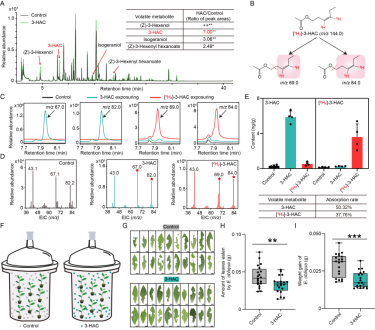
Figure 1. 3-HAC enhances tea plant resistance to Ectropis obliqua
To explore the molecular mechanism of 3-HAC-mediated insect resistance, combined metabolomic and transcriptomic analysis showed that 3-HAC significantly activates the JA signalling pathway in tea plants and identified the key JA biosynthesis gene CsLOX2. Silencing CsLOX2 in tea plants significantly reduced leaf JA content and resistance to E. obliqua feeding, while exogenous 3-HAC treatment restored JA content and insect resistance (Figure 2), indicating that after exogenous 3-HAC treatment, CsLOX2 is up-regulated to synthesize more JA and enhance resistance to E. obliqua.
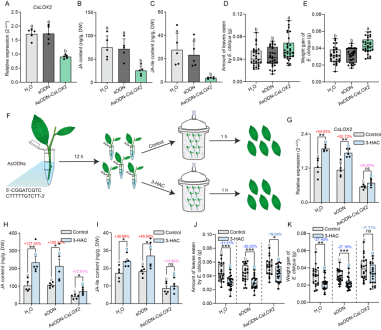
Figure 2. Transient down-regulation of CsLOX2 reduces JA levels and resistance to Ectropis obliqua in tea plants
Based on transcriptome correlation network analysis and screening of promoter cis-acting elements, the transcription factors CsNAC2 and CsMYB306 were found to be highly correlated with CsLOX2 expression, and yeast one-hybrid (Y1H) and surface plasmon resonance (SPR) experiments confirmed that these two transcription factors positively regulate CsLOX2 expression. Antisense inhibition and exogenous 3-HAC treatment experiments further showed that 3-HAC up-regulates CsLOX2 through inducing CsNAC2 and CsMYB306, thereby promoting JA synthesis (Figure 3) and enhancing tea plant resistance to E. obliqua.
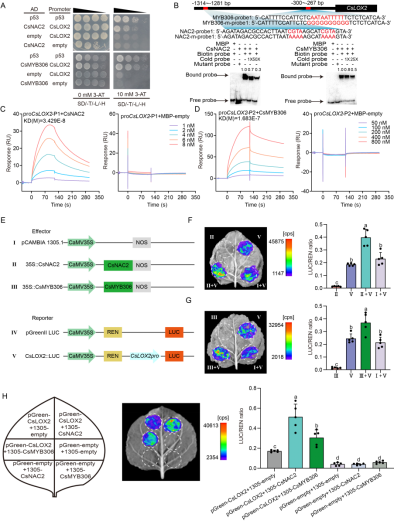
Figure 3. CsNAC2 and CsMYB306 positively activate CsLOX2 expression
Taken together, this study proposes that after tea plants absorb exogenous 3-HAC, insect resistance is enhanced through the “CsNAC2/CsMYB306 → CsLOX2 → JA” cascade (Figure 4). The results not only provide new insights into how exogenous HIPVs induce plant insect resistance, but also offer a theoretical basis for using 3-HAC as an environmentally friendly biopesticide to enhance tea plant insect resistance through non-contact application and reduce dependence on chemical pesticides, and provide gene resources for breeding insect-resistant tea varieties.
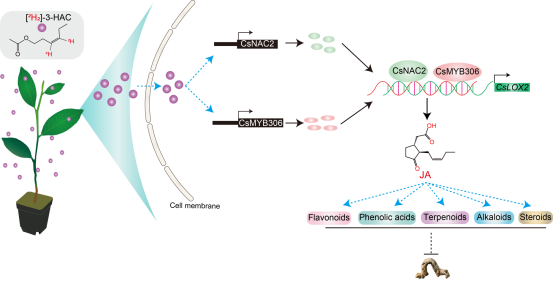
Figure 4. Model of the defence response of tea plants to Ectropis obliqua feeding induced by 3-HAC
The National Key Laboratory of Tea Plant Germplasm Innovation and Resource Utilization, Anhui Agricultural University, is the first affiliation and the corresponding author affiliation. Li Jiaxing, a doctoral student in the laboratory's Germplasm Resource Innovation and Breeding team, Gu Honglian (graduated) and master's student Li Mei, together with Professor Zhou Qiying of Xinyang Normal University, are co-first authors; Professor Wei Chaoling, Associate Professor Zhu Junyan and Professor Liu Shengrui are co-corresponding authors. Professor Xie Deyu of North Carolina State University, USA, participated in the study. The research was supported by the National Natural Science Foundation of China (U20A2045, 32472791, 32260790, 32202542), the Discipline Innovation and Intelligence Introduction Base for Tea Plant Biology and Quality Chemistry (D20026), the independent research programme of the National Key Laboratory of Tea Plant Germplasm Innovation and Resource Utilization (SKLTEA-ZZ202502) and the Dabie Mountain Laboratory Open Fund (DMLOF2024022). (Text and figures: Li Jiaxing; preliminary review: Guan Zhenyu; review: Song Chuankui)



 LATEST
RESEARCH
LATEST
RESEARCH