Recently, the team of Professor Wei Chaoling at the laboratory published online in Nature Communications a research paper entitled “Pangenome analyses of tea plants reveal structural variations driving gene expression alterations and agronomic trait diversification”. By constructing a pangenome of 22 representative tea plant accessions and their wild relatives, the study systematically resolved the regulatory role of structural variation in gene expression and agronomic traits during tea plant domestication, providing new perspectives and entirely new genetic resources for dissecting the genetic mechanisms of tea traits and for molecular breeding.
1. Construction of a high-quality tea plant pangenome
As an important global economic crop, tea plant is rich in genetic diversity and secondary metabolites, but traditional reference genomes struggle to capture comprehensive genetic variation. Using HiFi sequencing technology, the team assembled reference genomes of five cultivated tea plants and one wild relative (Camellia taliensis) and, together with 16 genomes published in public databases, constructed a high-quality pangenome covering cultivated species and wild relatives.
The pangenome contains 15,216 core gene families, accounting for 35.1% of all gene families, and the number of core genes tended to stabilize once the number of genomes exceeded 20, indicating good completeness. Phylogenetic analysis showed that wild tea plants and cultivated tea plants diverged about 5.71 million years ago, while the large-leaf varieties, small-leaf varieties and Baimaocha variety of cultivated tea formed clear genetic clades, providing a precise time scale for research on the origin and domestication of tea plants.
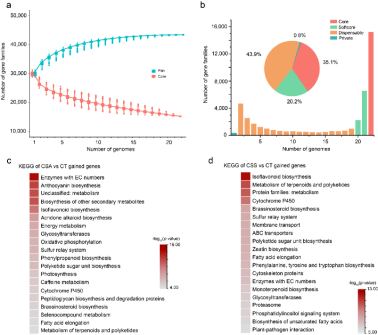
Figure 1. Characterization of pangenome gene families and core gene families in tea plants
2. Structural variation: a key genetic driver of tea plant domestication
The analysis found more than 1.37 million structural variations in the tea plant genome, of which presence/absence variations (PAVs) accounted for 68.3%, making them the predominant type. Notably, 22% of gene promoter regions contained PAVs, and these variations significantly affected gene expression levels; among them, genes up-regulated in cultivated species relative to wild relatives were mainly enriched in pathways related to flavour (such as flavonoid and amino acid metabolism, and terpenoid biosynthesis) and environmental adaptation, suggesting that these structural variations played an important role in the formation of tea quality during domestication.
Based on the graph pangenome, structural variations were genotyped across 275 tea germplasm accessions. Selective sweep analysis identified structural variation in the promoter region of the anthocyanin synthase gene ANS3, where three haplotypes exist: Hap1 carries a 192-bp insertion and is mainly present in wild relatives; Hap2 is a deletion type (lacking the 192-bp and 283-bp insertions) and is mainly present in large-leaf varieties; and Hap3 carries a 283-bp insertion and is mainly present in small-leaf varieties. This indicates that Hap1 was gradually lost during tea cultivation and domestication, while cultivated large-leaf and small-leaf varieties underwent a transition from Hap2 to Hap3. Further functional verification showed that the 192-bp insertion unique to wild relatives significantly enhances ANS3 promoter activity, thereby increasing ANS3 expression and making anthocyanin content markedly higher than in cultivated species, which explains why the young shoots of wild tea plants appear purple.
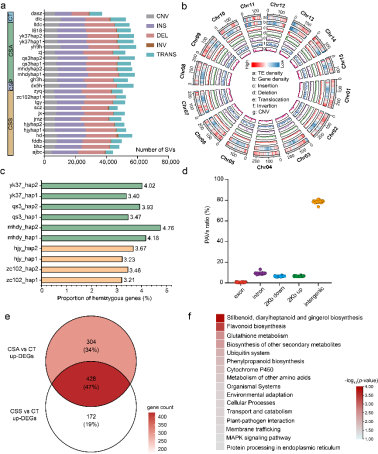
Figure 2. Identification of genomic structural variations in tea plants
3. New findings on the molecular mechanism of disease-resistance domestication
Inoculation experiments showed that wild tea plants were significantly less resistant to Colletotrichum than cultivated species. Analysis revealed that cultivated species acquired more disease-resistance-related genes than wild species, and that a 159-bp insertion exists in the promoter region of the CtLRR1 gene of wild tea plants. Further study found that, compared with cultivated tea, this insertion significantly up-regulated LRR1 expression in wild relatives; virus-induced gene silencing experiments showed that low LRR1 expression markedly increased resistance to Colletotrichum, indicating that LRR1 is a negative regulator of the immune response. This finding suggests that, during cultivation and domestication, tea plants gained higher resistance to anthracnose by losing the 159-bp insertion in the LRR1 promoter region.
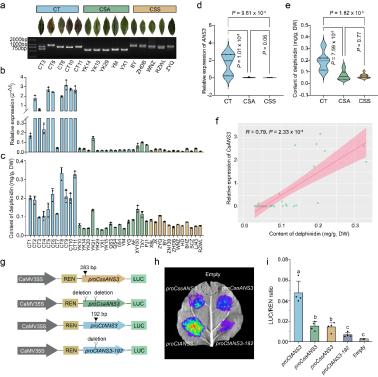
Figure 3. Effect of ANS3 promoter variation on anthocyanin biosynthesis
In summary, by constructing a high-quality tea plant pangenome resource, this study systematically resolved for the first time at the whole-genome scale the regulatory network of structural variation on tea plant gene expression and key agronomic traits (such as flavour compound synthesis and disease resistance). The study not only deepens the understanding of tea plant domestication history, but also provides important gene targets and theoretical support for the future use of beneficial allelic variation in wild resources for molecular design breeding and for breeding new tea varieties with high quality and high resistance.
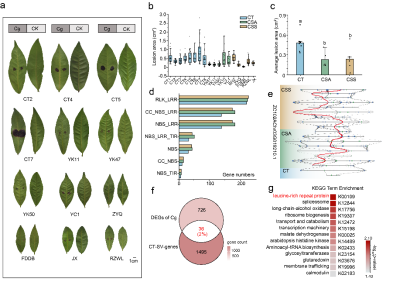
Figure 4. Effect of LRR1 promoter variation on resistance to tea anthracnose
In this study, the National Key Laboratory of Tea Plant Germplasm Innovation and Resource Utilization of Anhui Agricultural University is the first affiliation and the corresponding author affiliation. Tao Lingling, a doctoral student in the laboratory's Germplasm Resource Innovation and Breeding team, Associate Professors Zhu Junyan and Hu Jianbing and Mr. Xu Qi of the Agricultural Genomics Institute at Shenzhen, Chinese Academy of Agricultural Sciences, are co-first authors; Professors Wei Chaoling, Xia Enhua and Wan Xiaochun and Researcher Zhou Yongfeng of the Chinese Academy of Tropical Agricultural Sciences are co-corresponding authors. Chen Chunlin, Li Youyong, Chen Linbo and Liu Benying of the Tea Research Institute of the Yunnan Academy of Agricultural Sciences and Zhao Yuanyan and Hu Yanping of the Pu'er Institute of Agricultural Sciences participated in the research. The study was supported by the National Natural Science Foundation of China (grant nos. U20A2045, 32260790, 32202542 and 32472791), a science and technology project of Yunnan Province (grant no. 202102AE090038), the Discipline Innovation and Intelligence Introduction Base for Tea Plant Biology and Quality Chemistry (D20026), the Anhui Tea Germplasm Resource Garden project and the independent research programme of the National Key Laboratory of Tea Germplasm Innovation and Resource Utilization (grant no. SKLTEA-ZZ202502). (Text and figures: Tao Lingling; preliminary review: Guan Zhenyu; review: Song Chuankui)
Paper link: https://www.nature.com/articles/s41467-025-67060-5


 LATEST
RESEARCH
LATEST
RESEARCH