Recently, the team of Professor Xia Tao at the National Key Laboratory of Tea Plant Germplasm Innovation and Resource Utilization, Anhui Agricultural University, published in the internationally renowned journal Plant Physiology a research paper entitled “Analysis of lncRNA-mRNA pairs induced by Colletotrichum camelliae reveals Cslnc170 as a regulator of CsLOX4 in tea plants”. It clarifies for the first time the molecular mechanism by which the Cslnc170–CsLOX4 gene pair acts as a key regulatory factor to enhance tea plant resistance to anthracnose. This study reveals the regulatory mechanism of lncRNA–mRNA combinations and provides potential molecular targets for improving disease resistance in tea plants.
Tea anthracnose (caused by Colletotrichum camelliae) is a major disease of tea plants that seriously affects tea yield and quality. Plants widely regulate immune responses through non-coding RNAs (such as long non-coding RNAs, lncRNAs), but their role in tea plant disease resistance remains unclear. To address this, the study used RNA sequencing to analyse differentially expressed lncRNAs and mRNAs in tea leaves after anthracnose infection. Through positional correlation and base-complementarity prediction, 524 antisense lncRNA–mRNA pairs and 3,588 cis lncRNA–mRNA pairs were identified. In functional verification, the study focused on the cis gene pair Cslnc170–CsLOX4, in which Cslnc170 is located 9,254 bp downstream of the CsLOX4 gene. CsLOX4 encodes 13-lipoxygenase (13-LOX), an upstream catalytic enzyme in the jasmonic acid (JA) biosynthesis pathway, and the JA pathway is crucial for plant disease resistance.
To investigate how Cslnc170 regulates CsLOX4 expression, the study first used qRT-PCR and antisense oligonucleotide (AsODN)-mediated gene silencing experiments to verify the expression correlation between Cslnc170 and CsLOX4: silencing Cslnc170 significantly reduced CsLOX4 expression, and vice versa. Further mechanistic studies showed that Cslnc170 binds to the CsLOX4 promoter region (−930 to −952 bp) through the loop4 region (252–271 bp) of its secondary structure, activating CsLOX4 transcription (Figure 1).
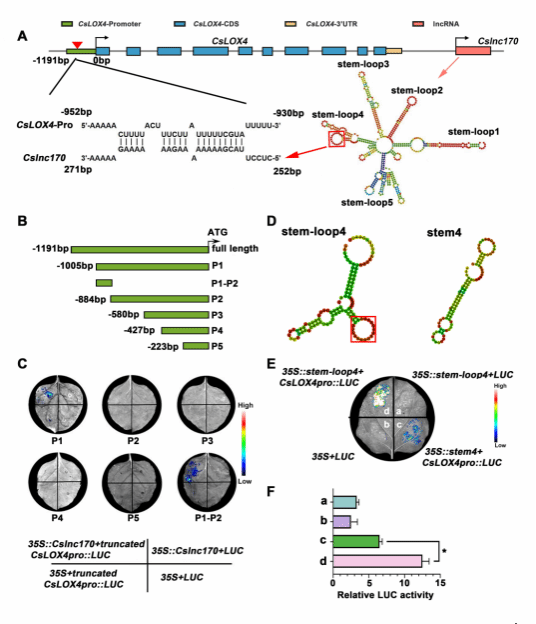
Figure 1. Dissection of the molecular mechanism by which Cslnc170 regulates CsLOX4
Having clarified how Cslnc170 regulates CsLOX4, the next question was how the Cslnc170–CsLOX4 gene pair regulates the physiological function of tea plant resistance to Colletotrichum. To address this, the study used Agrobacterium-mediated transient overexpression and AsODN silencing techniques to test disease resistance in tea leaves. The results showed that overexpression of either Cslnc170 or CsLOX4 significantly enhanced resistance to anthracnose, reducing lesion area by more than 50%; conversely, silencing either gene enlarged the lesion area. Notably, the loop4 deletion mutant of Cslnc170 lost its disease-resistance regulatory ability, indicating that this structural domain is indispensable for disease resistance.
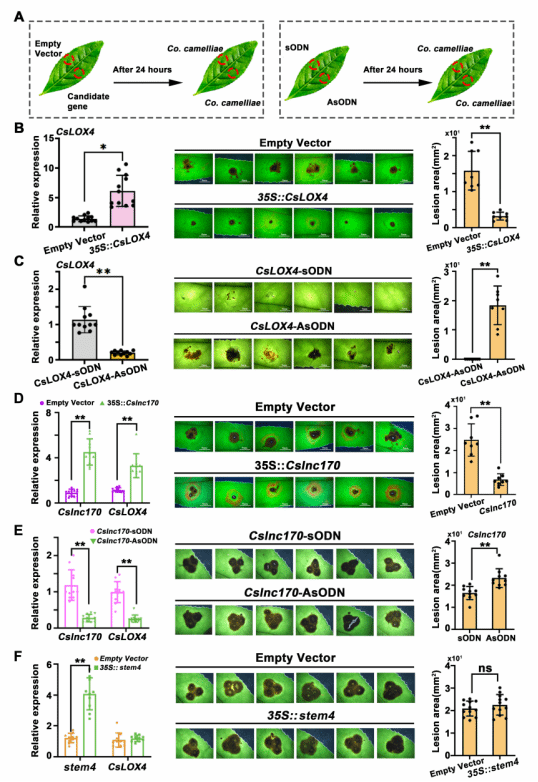
Figure 2. Functional analysis of CsLOX4 and Cslnc170 in tea plant resistance to anthracnose
In summary, this study clarified for the first time the molecular mechanism by which the Cslnc170–CsLOX4 gene pair enhances tea plant resistance to anthracnose through the JA pathway. As an lncRNA, Cslnc170 directly activates CsLOX4 transcription and promotes JA accumulation, thereby strengthening the defence response. This finding not only expands the understanding of lncRNA function in plant immunity, but also provides potential targets for disease-resistance breeding in tea plants. Future research could explore the roles of other lncRNA–mRNA pairs in secondary metabolic pathways in order to develop more efficient disease-resistance strategies.
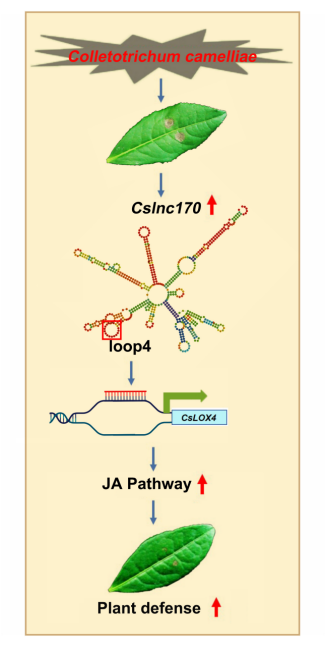
Figure 3. Model of Cslnc170–CsLOX4 regulating tea plant resistance to anthracnose
Anhui Agricultural University is the first affiliation. Postdoctoral fellow Jiang Ting and graduated master's student Liu Cheng of the National Key Laboratory of Tea Plant Germplasm Innovation and Resource Utilization are co-first authors, and Professors Xia Tao and Gao Liping are co-corresponding authors. Professor Liu Yajun and Associate Professors Jiang Xiaolan, Wang Haiyan and Wang Nana of Anhui Agricultural University made important contributions to the study. The research was supported by the National Natural Science Foundation of China.
Original paper: https://doi.org/10.1093/plphys/kiaf401



 LATEST
RESEARCH
LATEST
RESEARCH