Recently, the team of Professor Song Chuankui at the laboratory, together with the Tea Research Institute of the Chinese Academy of Agricultural Sciences, published in the internationally authoritative journal Plant Biotechnology Journal the latest research entitled “Natural variation of CsUGT71A60 determines growth and cold tolerance via regulating cytokinin glycosylation in Camellia sinensis”. It reveals for the first time the molecular mechanism by which tea plants, through natural variation of the glycosyltransferase gene UGT71A60, regulate cis-zeatin homeostasis and balance cold-defence responses against growth and development, providing a key theoretical basis for breeding tea cultivars that are both cold-tolerant and high-yielding.
As an important economic crop, tea plant (Camellia sinensis) is widely grown in tropical and subtropical regions around the world. However, as a perennial evergreen plant, tea plant is highly sensitive to low-temperature stress; sustained low temperatures readily inhibit growth, reduce yield and deteriorate quality. How to improve stress tolerance (especially cold tolerance) while maintaining normal growth is a long-standing challenge in crop breeding, because plants must trade off between defence responses and the allocation of growth resources. Through genetic diversity analysis and cold-tolerance phenotype identification of 139 tea cultivars, combined with genome-wide association analysis (GWAS) and proteomics, the team pinpointed a key low-temperature-induced gene, UGT71A60 (Figure 1). Natural variation of this gene is significantly associated with tea plant cold tolerance, and its expression level increases markedly under low-temperature stress. Further study found that UGT71A60 can catalyse the glycosylation of the active cytokinin cis-zeatin (cZ) to generate the inactive form cis-zeatin-9-O-glucoside (cZ9OG).
To verify gene function, the team conducted gene expression regulation experiments in tea plants and the model plant Arabidopsis. The results showed that silencing UGT71A60 aggravates low-temperature-induced photosystem damage and cell membrane permeability and significantly reduces cold tolerance, whereas plants overexpressing the gene showed stronger antioxidant capacity, lower reactive oxygen species accumulation and higher survival rates at low temperature. Notably, Arabidopsis overexpressing UGT71A60 not only had enhanced cold tolerance, but also showed significantly better root development, leaf size, tiller number and seed yield than the wild type, though flowering time was delayed, suggesting that the gene may optimize resource allocation by regulating hormone balance and prioritize growth and reproduction under stress.
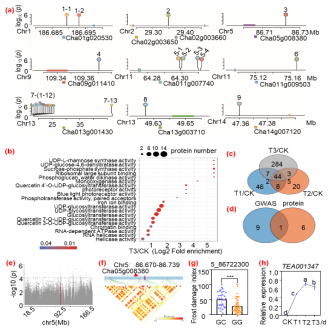
Figure 1. Association analysis between natural variation of CsUGT71A60 and cold tolerance
Notably, by regulating the dynamic balance between cZ and cZ9OG, UGT71A60 forms a “hormone reserve pool” under cold stress that can both respond rapidly to stress signals and avoid growth inhibition caused by excessive active hormone. In addition, the team found that the transcription factor ARR (TEA021099) can directly bind the UGT71A60 promoter and activate its expression, forming a non-canonical cold-tolerance signalling pathway mediated by ARR–UGT71A60 (Figure 2). This finding not only reveals the dual role of cytokinin glycosylation in plant environmental adaptation, but also provides a new target for crop stress-resistance breeding.
This study revealed for the first time the dual key role of cytokinin O-glycosylation in coordinating plant cold tolerance with growth and developmental plasticity, and identified a non-canonical cold-tolerance signalling pathway in which ARR directly regulates UGT to finely modulate cytokinin homeostasis. This finding not only deepens the understanding of the complexity of plant hormone regulatory networks, but also provides a highly promising target for crop breeding. By precisely regulating the expression or activity of UGT71A60 and its homologues, it may be possible to breed “win–win” new tea and other crop cultivars that are better adapted to abiotic stresses such as low temperature without sacrificing, or even while increasing, yield potential, so as to meet the challenges brought by global climate change.
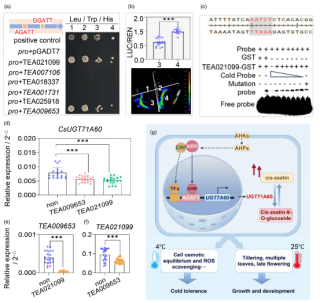
Figure 2. The transcription factor ARR directly binds the UGT71A60 promoter and activates its expression
This study was completed by the National Key Laboratory of Tea Plant Germplasm Innovation and Resource Utilization of Anhui Agricultural University in cooperation with the Tea Research Institute of the Chinese Academy of Agricultural Sciences. Postdoctoral fellow Zhao Mingyue of Anhui Agricultural University is the first author of the paper, and Wang Jingming, Jin Jieyang and Researcher Hao Xinyuan of the Tea Research Institute of the Chinese Academy of Agricultural Sciences are co-first authors. Song Chuankui and Gao Ting of the National Key Laboratory of Tea Plant Germplasm Innovation and Resource Utilization of Anhui Agricultural University and Researcher Wang Xinchao of the Tea Research Institute of the Chinese Academy of Agricultural Sciences are the co-corresponding authors. Associate Professor Jing Tingting of Anhui Agricultural University and Professor Wilfried Schwab of the Technical University of Munich, Germany, participated in the study. The research was supported by the National Key R&D Program and the National Natural Science Foundation of China. (Text and figures / Zhao Mingyue; editor / Guan Zhenyu; pre-review / Song Chuankui; review / Xia Liming)



 LATEST
RESEARCH
LATEST
RESEARCH