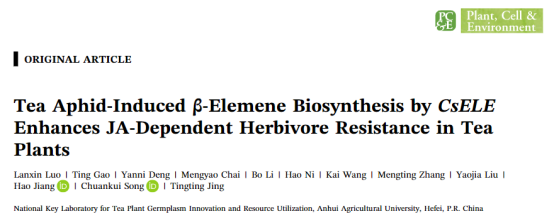
Recently, the team of Professor Song Chuankui at the National Key Laboratory of Tea Plant Germplasm Innovation and Resource Utilization, Anhui Agricultural University, published in the internationally renowned journal Plant, Cell & Environment a research paper entitled “Tea aphid-induced β-Elemene biosynthesis by CsELE enhances JA-dependent herbivore resistance in tea plants”. The work clarified for the first time the molecular mechanism by which aphid feeding activates the CsELE gene–β-elemene synthesis pathway to synergize with jasmonic acid (JA) defence signalling and enhance tea plant insect resistance, providing a new strategy for molecular breeding of insect-resistant tea plants.
The tea aphid (Toxoptera aurantii), a major piercing-sucking pest in tea gardens, inhibits the development of new shoots by sucking phloem sap, causing a significant decline in tea yield and quality. Existing chemical pesticide control is prone to residue risks, so there is an urgent need to develop green control technologies. When attacked by insects, plants usually release volatile terpenoids, which can both directly repel pests and achieve indirect defence by attracting natural enemies. Although β-elemene has been detected in tea plants, its insect-resistance function and key biosynthetic genes remain unclear. This study identified for the first time the aphid-feeding-induced β-elemene biosynthetic pathway and revealed its core role in tea plant insect-resistance defence.
Through screening of aphid-resistant tea cultivars and analysis of volatile metabolites, the team found that β-elemene enrichment levels in highly resistant tea plants were significantly higher than in weakly resistant plants. When tea new shoots were treated with β-elemene, the treated plants showed an obvious aphid repellent effect in repellency tests, and the repellent activity was positively correlated with concentration (Figure 1). In contact toxicity tests, 48 hours after β-elemene treatment the median lethal concentration (LC50) against the tea aphid dropped to 3.725 μg, showing a significant time–dose cumulative effect.
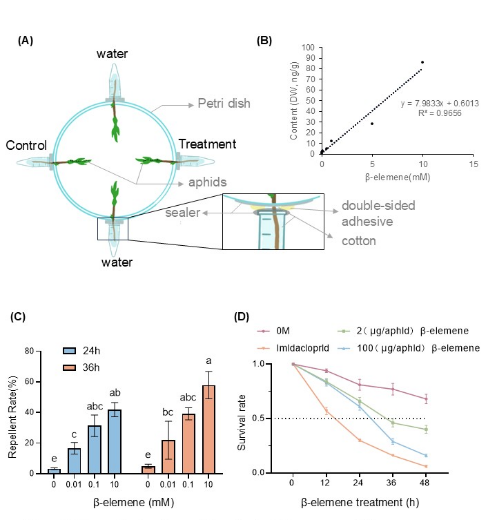
Figure 1. Repellent effect of β-elemene on the tea aphid
To reveal the molecular basis of β-elemene-mediated insect resistance, the team used mass spectrometry imaging (DESI-MSI) and liquid chromatography–mass spectrometry (LC-MS) and found that aphid infestation significantly increased leaf JA content and simultaneously activated expression of the key JA synthesis genes CsAOS and CsAOC, suggesting that JA may play an important role in the tea plant response to aphid damage. To further clarify the anti-aphid effect of β-elemene, the study cloned CsELE, the key enzyme gene for β-elemene synthesis in tea plants; in vitro enzyme activity experiments confirmed that it can catalyse the formation of β-elemene from farnesyl pyrophosphate (FPP). Through transient overexpression and antisense oligonucleotide silencing techniques, the relationship between CsELE and β-elemene synthesis and aphid resistance was demonstrated.
To further clarify the relationship between CsELE and the JA pathway, the team used a dual-luciferase reporter system and yeast one-hybrid (Y1H) experiments to show that the JA signalling core transcription factor MYC2a can specifically bind the E-box element in the CsELE promoter region and positively regulate its transcriptional activity (Figure 2). In summary, this study clarified for the first time the molecular mechanism by which tea plants resist aphid infestation through the β-elemene–jasmonate synergistic pathway, providing key theoretical support for insect-resistance breeding in tea plants (Figure 3).
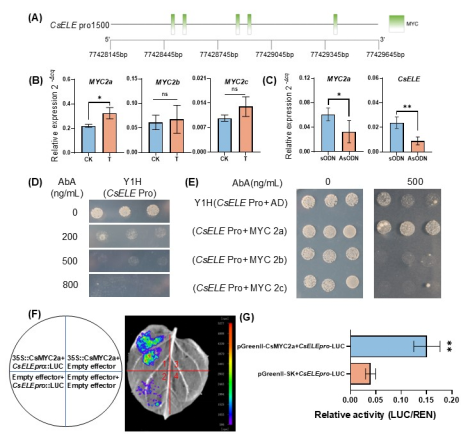
Figure 2. MYC2a positively regulates CsELE expression
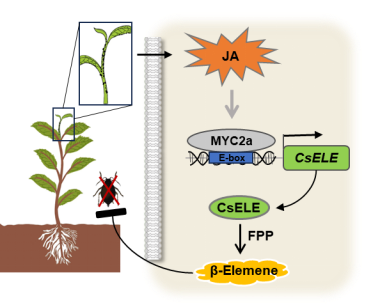
Figure 3. Model of the role of CsELE in the tea plant response to aphid infestation
Master's student Luo Lanxin and teacher Gao Ting of the National Key Laboratory of Tea Plant Germplasm Innovation and Resource Utilization, Anhui Agricultural University, are co-first authors of the paper, and Associate Professor Jing Tingting and Professor Song Chuankui are co-corresponding authors. Associate Professor Jiang Hao of the laboratory also participated in the work. The research was supported by the National Key R&D Program and the National Natural Science Foundation of China.


 LATEST
RESEARCH
LATEST
RESEARCH