Recently, the team of Professor Song Chuankui at the National Key Laboratory of Tea Plant Germplasm Innovation and Resource Utilization, Anhui Agricultural University, published online in the journal New Phytologist a research paper entitled “Glycoside-specific metabolomics reveals the novel mechanism of glycinebetaine-induced cold tolerance by regulating apigenin glycosylation in tea plants”. The study developed a glycoside-specific metabolomics method using cone voltage-induced in-source fragmentation and revealed a new mechanism by which glycine betaine (GB) induces cold tolerance in tea plants by regulating apigenin glycosylation, broadening the understanding of the role of glycosylation in plant cold tolerance.
Tea plant (Camellia sinensis) is recognized as one of the world's most important economic crops because of its rich secondary metabolites. However, in recent years global climate change has caused frequent cold damage and freezing injury in early spring, severely constraining its growth and ecological distribution and thus hindering the sustainable development of the tea industry. When plants experience cold stress, their metabolites undergo modifications including methylation and glycosylation, which are particularly important in regulating the solubility, stability and bioactivity of various secondary metabolites and are closely related to plant stress tolerance. Among these, glycosylation is a key modification affecting secondary metabolites under stress and is influenced by GB to regulate plant stress tolerance. However, the complexity of glycosides and the challenges of their detection have hindered understanding of the regulatory mechanism of their interaction with GB metabolism during stress.
First, this study developed a glycoside-specific metabolomics method based on cone voltage-induced in-source fragmentation, which achieved accurate and high-throughput detection of glycosides in tea plants by narrowing the target ion range by 94.3%. Based on this method, silencing betaine aldehyde dehydrogenase (CsBADH1), which synthesizes GB in tea plants, revealed that 60 glycoside ions changed significantly, indicating that glycosylation may affect GB-induced cold tolerance.
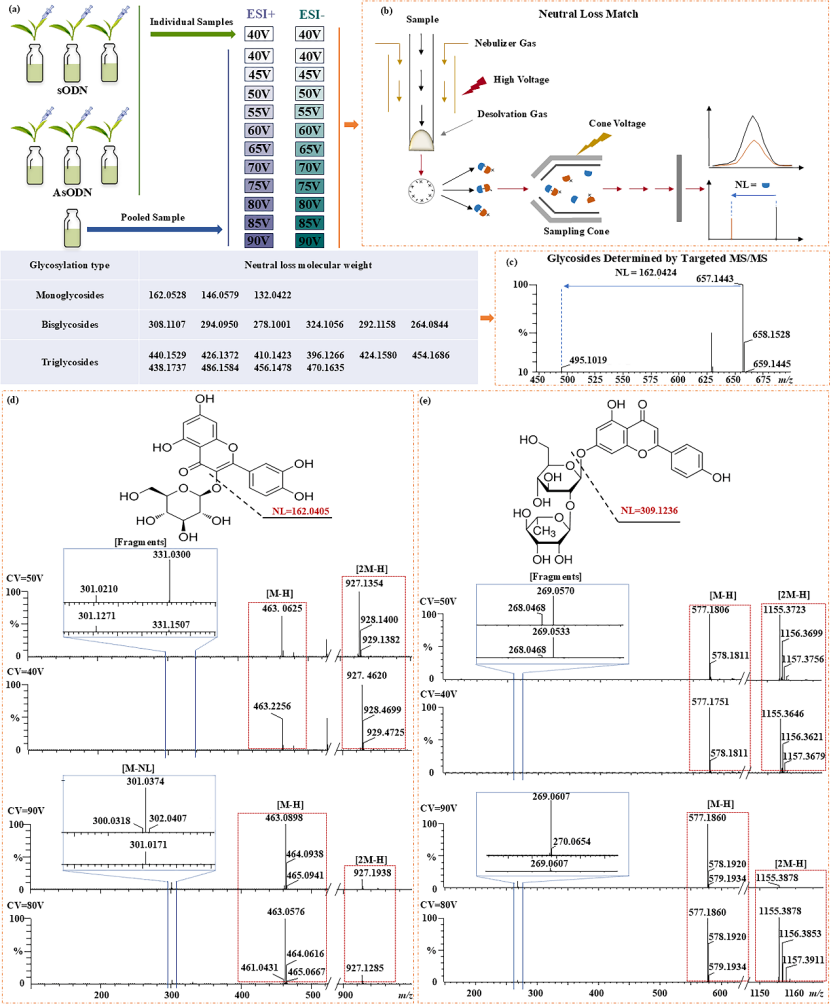
Figure 1. Glycoside-specific metabolomics strategy for tea plants based on cone voltage-induced in-source fragmentation
To further investigate which glycosides are related to GB-mediated cold tolerance in tea plants, combined analysis of glycoside-specific metabolomics and conventional metabolomics identified a GB-regulated cold-responsive metabolite — isorhoifolin.
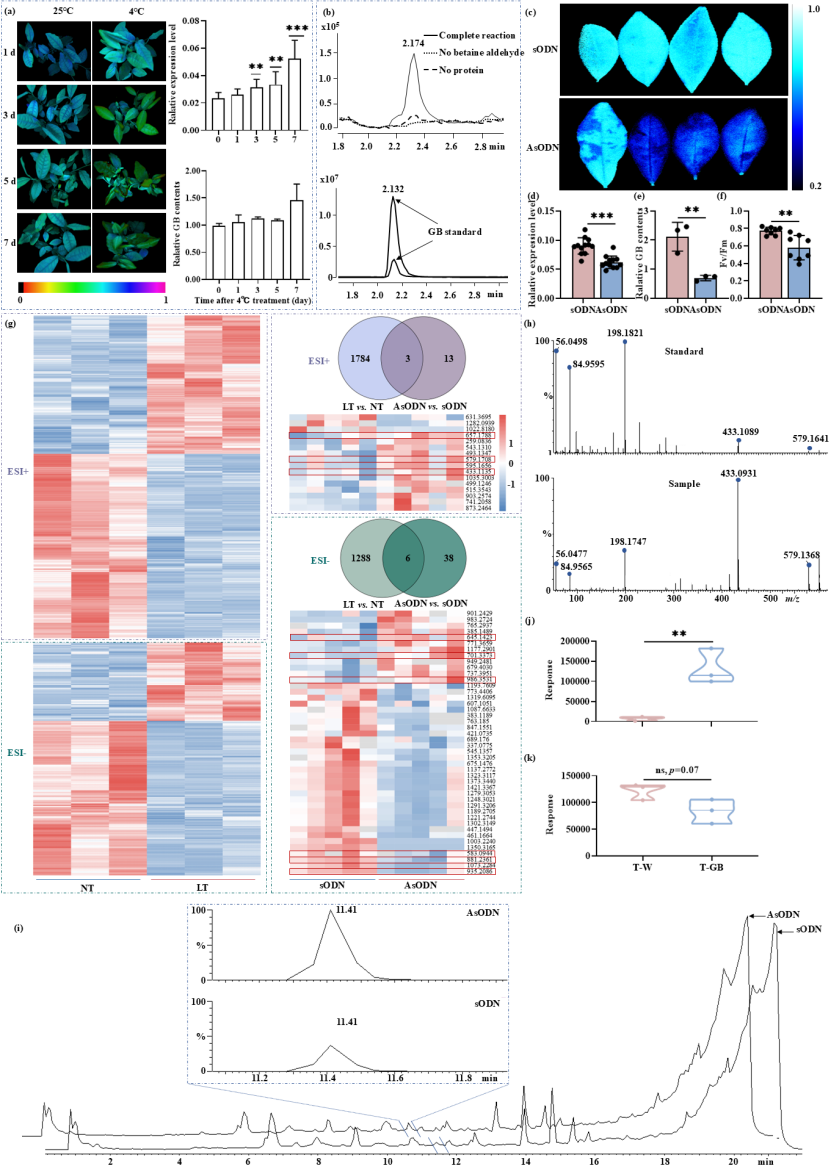
Figure 2. Combined analysis of glycoside-specific and conventional metabolomics identifies the GB-regulated cold-responsive metabolite isorhoifolin
Finally, combining exogenous spraying and gene silencing experiments, the precursor of isorhoifolin — apigenin — was found to be a new cold-tolerance metabolite that enhances tea plant cold tolerance by scavenging reactive oxygen species. These findings not only provide a theoretical basis for studying the role of the GB–glycoside cascade in the mechanism of enhanced cold tolerance in tea plants, but also help broaden the understanding of how plant secondary metabolic networks regulate stress resistance.
Anhui Agricultural University is the first affiliation and the corresponding affiliation. Young teacher Huang Shan and 2022 master's student Zhang Sasa of the National Key Laboratory of Tea Plant Germplasm Innovation and Resource Utilization are the first authors of the paper, and Professor Song Chuankui is the corresponding author. The research was supported by the National Natural Science Foundation of China. (Text and figures / Huang Shan; editor / Guan Zhenyu; pre-review / Song Chuankui; review / Zheng Xuelin)
Paper link: https://doi.org/10.1111/nph.20410


 LATEST
RESEARCH
LATEST
RESEARCH