From January 20 to 21, a delegation from Mokpo National University of South Korea visited the National Key Laboratory of Tea Plant Germplasm Innovation and Resource Utilization for a two-day exchange and visit.
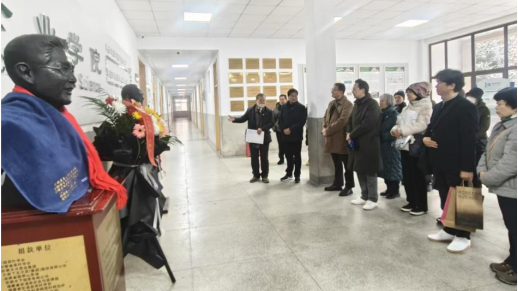
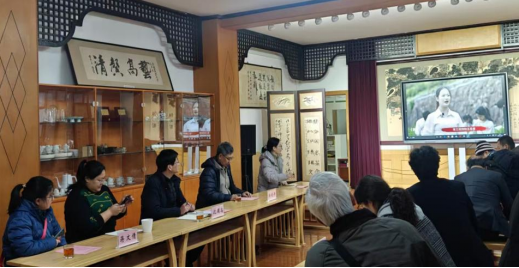
Upon arrival, the delegation first laid flowers before the bronze statues of Professors Chen Chuan and Wang Zenong to express their high respect for these pioneers of tea science. The visitors then toured the tea science discipline culture exhibition room, the tea appraisal room and the tea art room in the Tea Industry Building, gaining a deeper understanding of the historical heritage and current development of the tea science discipline at Anhui Agricultural University. At the seminar, Shen Zhougao, Director of the Institute of Chinese Tea Culture, chaired the exchange session, and scholars from both sides held in-depth discussions on tea culture education, research and cooperation.
The delegation then visited the National Key Laboratory and held talks with Professor Wan Xiaochun, Director of the laboratory, Professor Xia Tao and other experts and scholars. At the meeting, Li Daxiang, Director of the University's International Cooperation Office, introduced the university's various measures and achievements in international education; Deng Weiwei, Deputy Dean of the College of Tea Industry, introduced the laboratory's development; and the Korean side introduced the development of its institution as the only international tea culture degree-granting programme approved by the Korean Ministry of Education, and formally presented an invitation to the 2026 International Symposium to be held in Mokpo, South Korea. The two sides focused on their intention to cooperate in publishing Korean editions of classic tea science textbooks such as A General History of the Tea Industry, Tea Manufacturing and Tea Biochemistry, and shared experiences in tea culture exchange. Professor Wan Xiaochun was invited to give a special report on International Standards for China's Six Major Tea Categories, demonstrating China's leading international position in tea industry standardization.
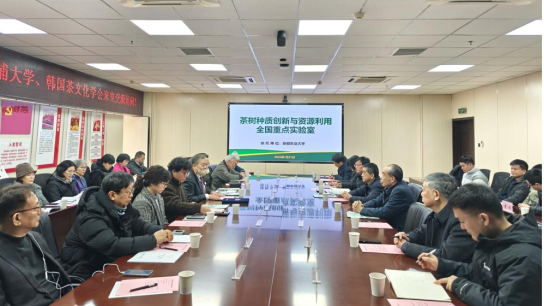
This exchange covered multiple dimensions including discipline development, exchange and cooperation, and cultural dissemination. It not only consolidated the friendly relationship between the laboratory and Mokpo National University of South Korea, but also further enhanced the visibility and influence of the tea science discipline of Anhui Agricultural University in the international tea science and technology and cultural fields, laying a solid foundation for deeper cooperation in the future. (Text/Photos: Han Jieyun; First review: Zhang Xianlin; Second review: Deng Weiwei; Final review: Jiang Jiasheng)


 LATEST
NEWS
LATEST
NEWS