On February 4, the internationally renowned academic publisher Springer Nature officially published the English academic monograph Tea Chemistry and Health Benefits: Flavour and Processing Dynamics. The book was edited by Associate Professor Zhai Xiaoting from Professor Wan Xiaochun's team at the National Key Laboratory of Tea Plant Germplasm Innovation and Resource Utilization, and co-authored by staff from the National Key Laboratory of Tea Science, Hunan Agricultural University and other institutions. The monograph is now fully available on the SpringerLink platform, offering both an e-book and a hardcover edition.
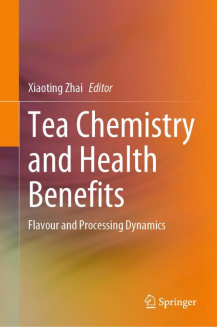
As a breakthrough achievement of the National Key Laboratory in the field of basic tea science research, this monograph systematically builds a body of scientific knowledge ranging from tea processing quality chemistry to health mechanisms. It deeply integrates the three fields of flavour chemistry, processing dynamics and health benefit mechanisms, providing theoretical and practical reference for global tea science research and industrial development.
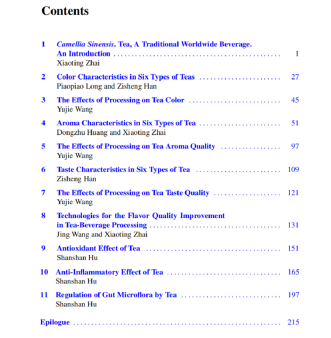
The book consists of eleven chapters:
Introduction (Chapter 1): an overview of the global distribution of tea plants, wild and cultivated tea varieties, tea plant cultivation and management, tea classification, brewing customs, the current state of new-style tea beverages, and an overview of tea flavour characteristics and health benefits.
Flavour and Processing of the Six Major Tea Categories (Chapters 2-7): a systematic exposition of the composition of the key compounds responsible for tea colour, aroma and taste, and, from the perspective of processing dynamics, a detailed revelation of the formation and transformation mechanisms of flavour compounds during the processing of the six major tea categories (green, black, oolong, white, yellow and dark tea).
Flavour Regulation Technology for Tea Beverages (Chapter 8): a discussion of flavour regulation technologies and innovation trends in the industrial production of modern tea beverages.
Evaluation of Health Benefits (Chapters 9-11): an in-depth analysis, at the molecular and cellular levels of oxidative stress, inflammatory responses and gut microbiota, of the mechanisms of action of active components such as tea polyphenols and theanine, providing modern life science evidence for the health benefits of tea.
As a national-level platform for tea science research and the development of the tea science discipline, the National Key Laboratory of Tea Plant Germplasm Innovation and Resource Utilization has always been committed to advancing the development and innovation of tea science. The publication of this monograph showcases the laboratory's profound accumulation in the field of tea chemistry and health research, and further reflects its sense of responsibility in actively promoting Chinese tea science research achievements to the international stage and leading disciplinary development. (Text/Photos/Editor: Hui Hao; First review: Guan Zhenyu; Final review: Song Chuankui)
Publisher page: Tea Chemistry and Health Benefits



 LATEST
NEWS
LATEST
NEWS