

About
Home > About > About the LaboratoryAbout the Laboratory
Tea science is a traditional and advantageous discipline at Anhui Agricultural University. It originated from the Tea Specialization Department of the Agriculture College at Fudan University, founded in 1939, and is the cradle of tea science education in China. The laboratory was developed on the basis of the tea science laboratory established by renowned tea scientists including Professors Zenong Wang and Chuan Chen. It was successively approved as a key laboratory by the Ministry of Agriculture (1997), Anhui Province (1998), and the Ministry of Education (2003). On January 20, 2015, it was approved as a state key laboratory co-founded by the Ministry of Science and Technology and Anhui Province. In November 2016, it was approved by the Ministry of Education to establish the International Joint Laboratory of Tea Chemistry and Health. In March 2018, it became one of the first ten Anhui Provincial Laboratories. The laboratory has been selected into the Ministry of Education "Innovative Team Development Program" and the "National University Huang Danian-style Teacher Team", and was awarded the honors of "National Advanced Collective of Professional and Technical Talents" and "National Advanced Collective in Education System". In 2024, relying on Anhui Agricultural University and based on the State Key Laboratory of Tea Plant Biology and Utilization (co-founded by the province and ministry), the laboratory successfully completed the reorganization of the National Key Laboratory in collaboration with the Tea Research Institute of the Chinese Academy of Agricultural Sciences and Hunan Agricultural University, and was approved in December 2024 as the National Key Laboratory of Tea Plant Germplasm Innovation and Resource Utilization.
The National Key Laboratory currently has 152 permanent staff members, including 133 with senior professional titles; 12 national-level talents, and 14 position experts (including 1 chief expert) of the National Tea Industry Technology System. The laboratory adheres to the "Four Orientations" and serves the national strategies of rural revitalization, "Healthy China", and the Belt and Road Initiative. It focuses on the cultivation of major new varieties that are high-quality, high-yield, multi-resistant, machinery-friendly, and specialized, as well as the high-value utilization of tea resources. It conducts scientific research and development of new technologies and products in the directions of tea germplasm evaluation and innovation, secondary metabolism and regulation, breeding technology and variety cultivation, and tea processing and high-value utilization. The laboratory aims to build an internationally first-class new highland for tea science basic theory, a main base for talent gathering and cultivation, a source of scientific and technological innovation and achievement transformation, and an international exchange and cooperation center. It strives to become a national strategic scientific and technological force for the tea industry, leading the high-quality development of China's tea industry.


Four Research Directions
Facing the new strategic needs of national innovation-driven development, the "State Key Laboratory of Tea Plant Biology and Utilization (Co-founded by Province and Ministry)" actively optimized and reorganized, and jointly established the "National Key Laboratory of Tea Plant Germplasm Innovation and Resource Utilization" with the Tea Research Institute of the Chinese Academy of Agricultural Sciences and Hunan Agricultural University, laying out four directions.
Talent Team
Well-structured, energetic and vigorous
Major Tasks
Tea Germplasm Innovation and Genetic Mechanism Analysis of Traits
Precise evaluation of tea germplasm resources, research on evolution and domestication mechanisms of tea germplasm, and discovery and genetic mechanism analysis of key genes for important traits in tea plants.
Formation and Regulation of Tea Quality Components
Metabolic pathways of characteristic secondary metabolites in tea plants, stress resistance functions and mechanisms of tea secondary metabolites, and cultivation regulation mechanisms of tea secondary metabolites.
Innovation in Tea Breeding Technology and Variety Creation
Establishment of efficient tea breeding technology system, creation of excellent new tea germplasm, and cultivation of breakthrough new tea varieties.
High-Value Processing and Utilization of Tea Resources
Research on processing and transformation mechanisms of tea quality components, intelligent tea picking and processing technology research, bio-manufacturing and functional tea product development.
Five Landmark Contributions
Established the World's Most Comprehensive Tea Germplasm Repository
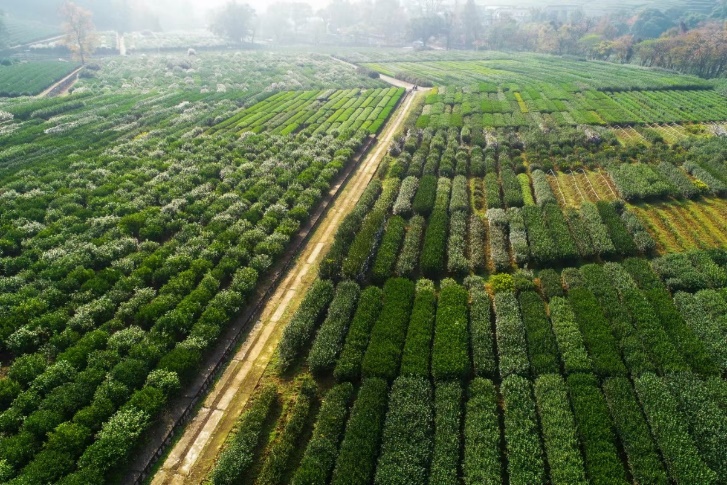
Built the world's largest tea germplasm bank, preserving nearly 10,000 accessions. First developed comprehensive evaluation standards for tea germplasm resources, and identified a batch of high-quality resources suitable for export black tea production. Formulated the first international DUS testing guidelines for tea new varieties.
World-Leading Research on Tea Secondary Metabolite Biosynthesis Mechanisms
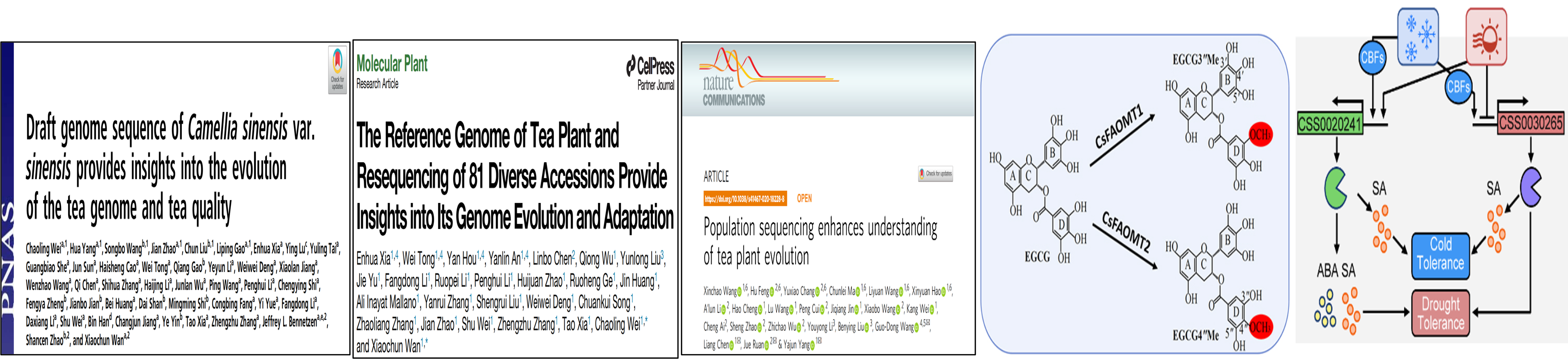
First to decode the genome of the small-leaf tea variety, and established the first tea genome database, which has been accessed over 6 million times by nearly 100 countries. Systematically revealed the synthesis and regulation mechanisms of tea flavor compounds including bitterness, astringency, umami, and aroma.
Leading Global Innovation in Tea Molecular Breeding Technology
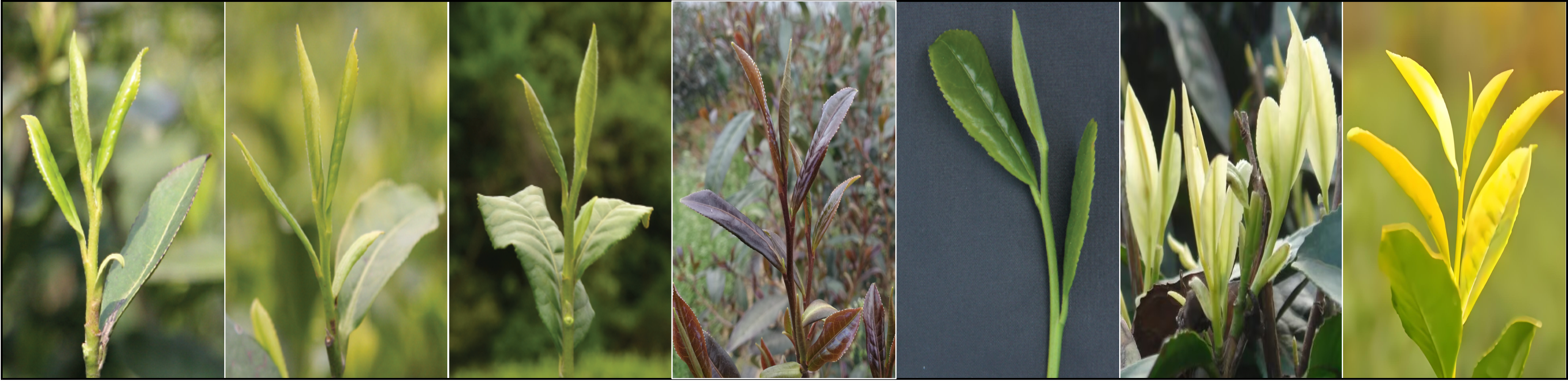
Constructed the world's first highest-density genetic linkage map and whole-genome SNP chip for tea plants. As the leading institution, bred 61 national-level tea new varieties, ranking first in the world in quantity, among which 'Longjing 43' has the largest promotion area worldwide.
World-Class Tea Automated Processing and Resource Utilization Technology
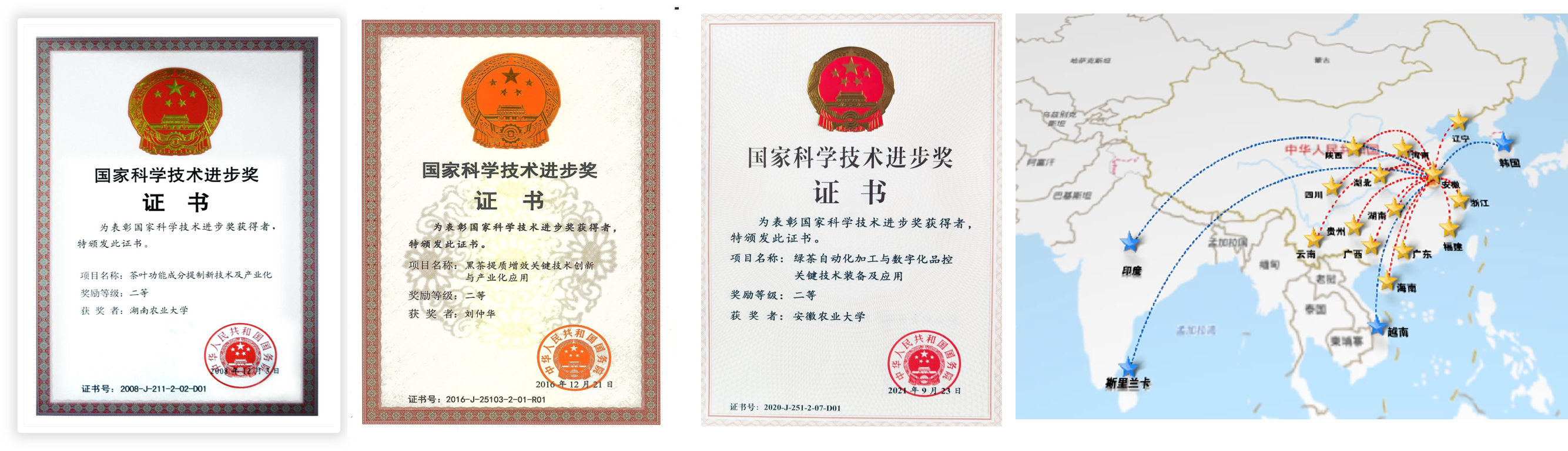
Established the key technology system for green tea automated processing and digital quality control, which has been promoted to all tea-producing regions in China and exported to over 10 countries. Innovated the key technology for controlled fermentation of dark tea, achieving a 50-fold increase in output value. Tea extract annual production accounts for 70% of the global total.
Leading the Formulation of International Tea Standards
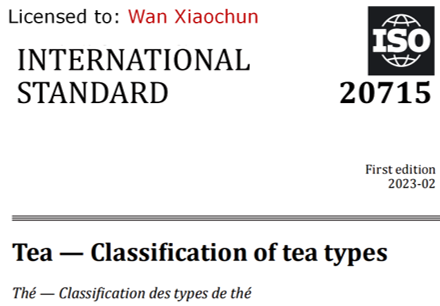
The laboratory director serves as the head/vice head of the Chinese delegation to the ISO Technical Committee on Tea. In the past 5 years, formulated 5 international standards including "Tea Classification", accounting for 71% of the same industry. Reconstructed international standards for maximum residue limits of pesticides in tea.
Strongest Global Tea Science Basic Research Force
Published 28 papers in internationally renowned journals such as PNAS, Mol Plant, Nat Commun, and Plant Cell, accounting for 85% of international tea-related articles at the same level; 69 highly-cited tea-related papers, ranking first in the world.