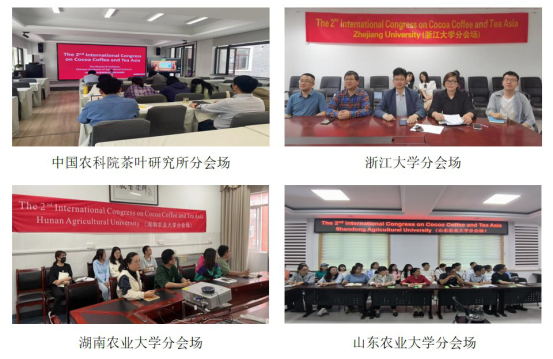
From May 19 to 20, the Second International (Asian) Academic Conference on Cocoa, Coffee and Tea, organized by the State Key Laboratory of Tea Plant Biology and Utilization of AAU and catered by Khazar University, was held in Baku, capital of Azerbaijan. More than 350 representatives from 19 countries including the United States, Germany, Russia, Belgium, Ireland, South Korea, Turkey, Afghanistan, Iran, Nigeria and the United Arab Emirates, as well as more than 20 organizations including the Tea Research Institute of the Chinese Academy of Agricultural Sciences, Zhejiang University, Hunan Agricultural University, Shandong Agricultural University, Nanjing Agricultural University and the Tea Research Institute of the Guangdong Academy of Agricultural Sciences attended the meeting (online and offline). Among them, more than 120 teachers and students of AAU engaged in related fields participated in the online conference.

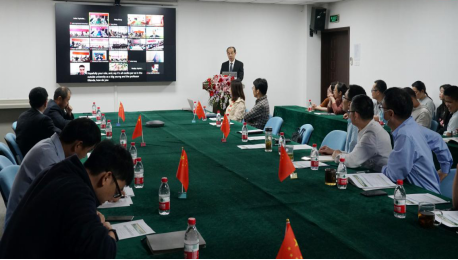

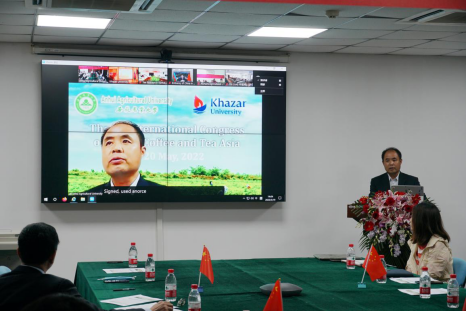
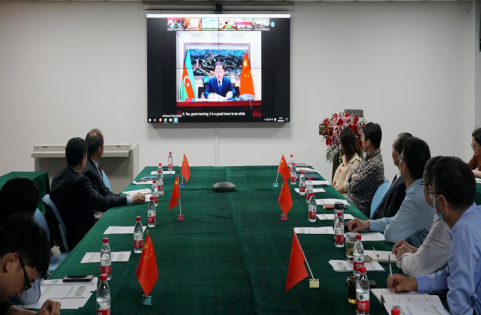
On the opening ceremony, Professor Irada Khalilova, President of Khazar University, on behalf of the caterer, delivered a welcome speech to the offline and online participants. She said that the smooth convening of this conference not only enriched and expanded the academic exchange of the International Conference on Cocoa, Coffee and Tea held in Europe, but also had profound significance for promoting the scientific, technological and cultural exchanges between Asia and Europe. Professor Xiaochun Wang, director of the laboratory, made an opening speech in the name of the presidium of the conference. He hoped that through this conference, the latest research results could be communicated, an academic platform could be founded, and jointly, the cross integration and coordinated development of the world's three major drinks in scientific and technological research could be promoted. Professor Tao Xia, the president of AAU, representing the organization unit and the academic committee of the conference, made a key introduction to the basic situation of the University's discipline of construction and scientific research. Mr. Tao Ding, charge d'affaires of the Chinese Embassy in Azerbaijan, attended the opening ceremony and said that the people of China and Azerbaijan both love planting, making and drinking tea. Tea is an important link for people of the two countries, hoping that such high-level international exchange activities would continue. Wenjun Dong, director of the Science & Technology Exchange Office with Foreign Countries of Department of Science and Technology of Anhui Province, briefed the participants on the main achievements made in the scientific and technological innovation of Anhui Province and the policies to promote it.
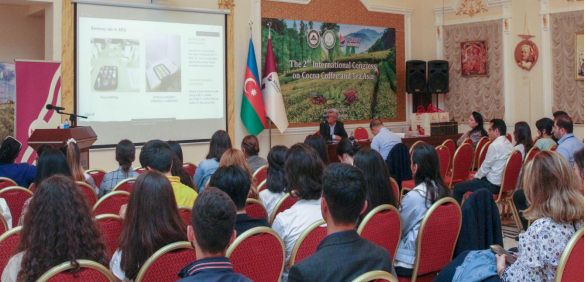

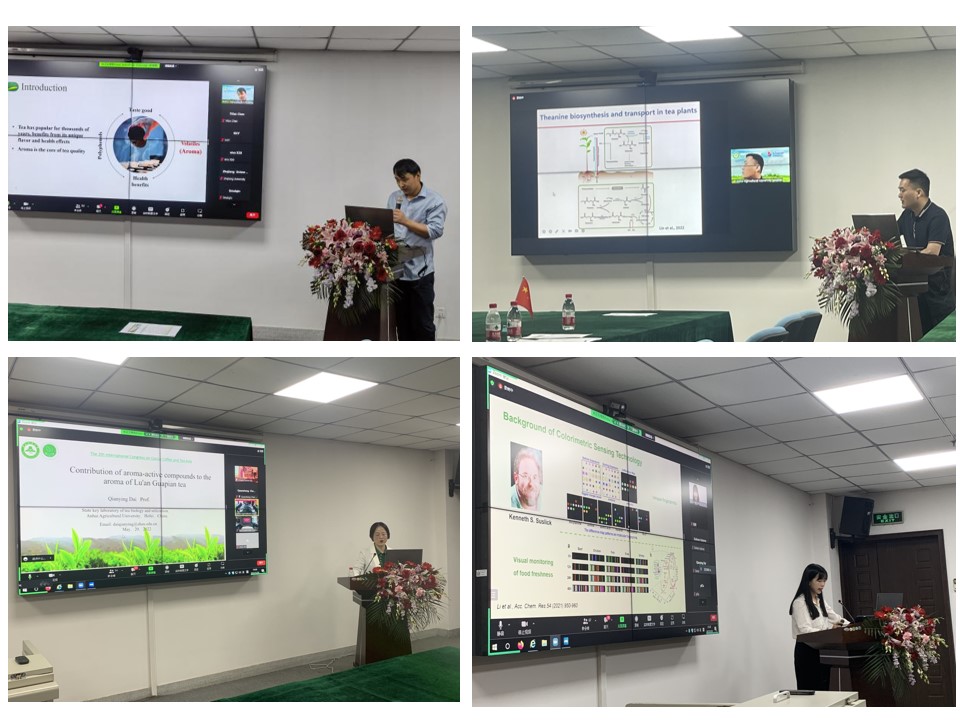
51 oral academic exchange reports with rich contents, covering the latest achievements in biodiversity and genomics, safety production and health efficacy, social and cultural impact of the three drinks, and tea processing chemistry and utilization, were carried out at the conference with strong a academic atmosphere. Professor Xiaochun Wan of our AAU made the keynote report of the conference, and Chuankui Song, Zhaoliang Zhang, Qianying Dai, Luqing Li, Jingming Wang(student), Yue Zhao (student) and so on also made a report.
A total of 100 abstracts submitted by the participants are included in the conference, covering biology, chemistry, metabolomics, nutrition and health, quality and safety control, processing and comprehensive utilization of cocoa, coffee and tea. The international journals Beverage Plant Research and Khazar Journal of Humanities and Social Sciences will publish albums of the outstanding papers submitted at the conference.
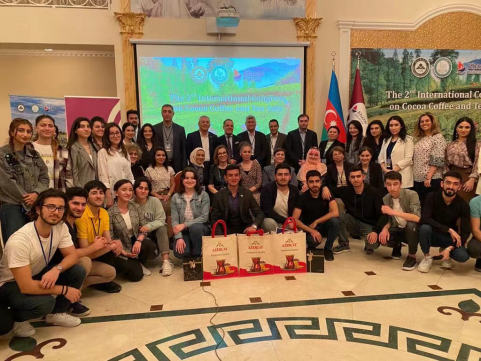
Through the academic exchanges and lively discussions at this conference, the participants further strengthened their in-depth understanding of the latest academic frontiers and industry dynamics of the three traditional beverages, promoted the development of related disciplines, and at the same time greatly enhanced the world influence of Chinese tea. The chairs of the conference were Prof. Xiaochun Wan, Prof. Marco Arlorio (East Piedmont University, Italy) and Prof. Vincenzo Fogliano (Wageningen University, Netherlands), Prof. Sezai Ercisli (Atatürk University, Turkey).
